




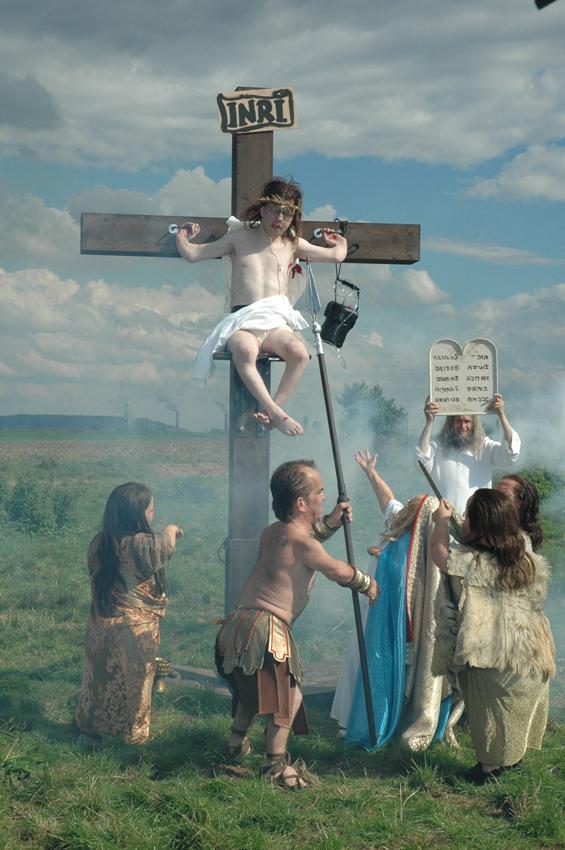
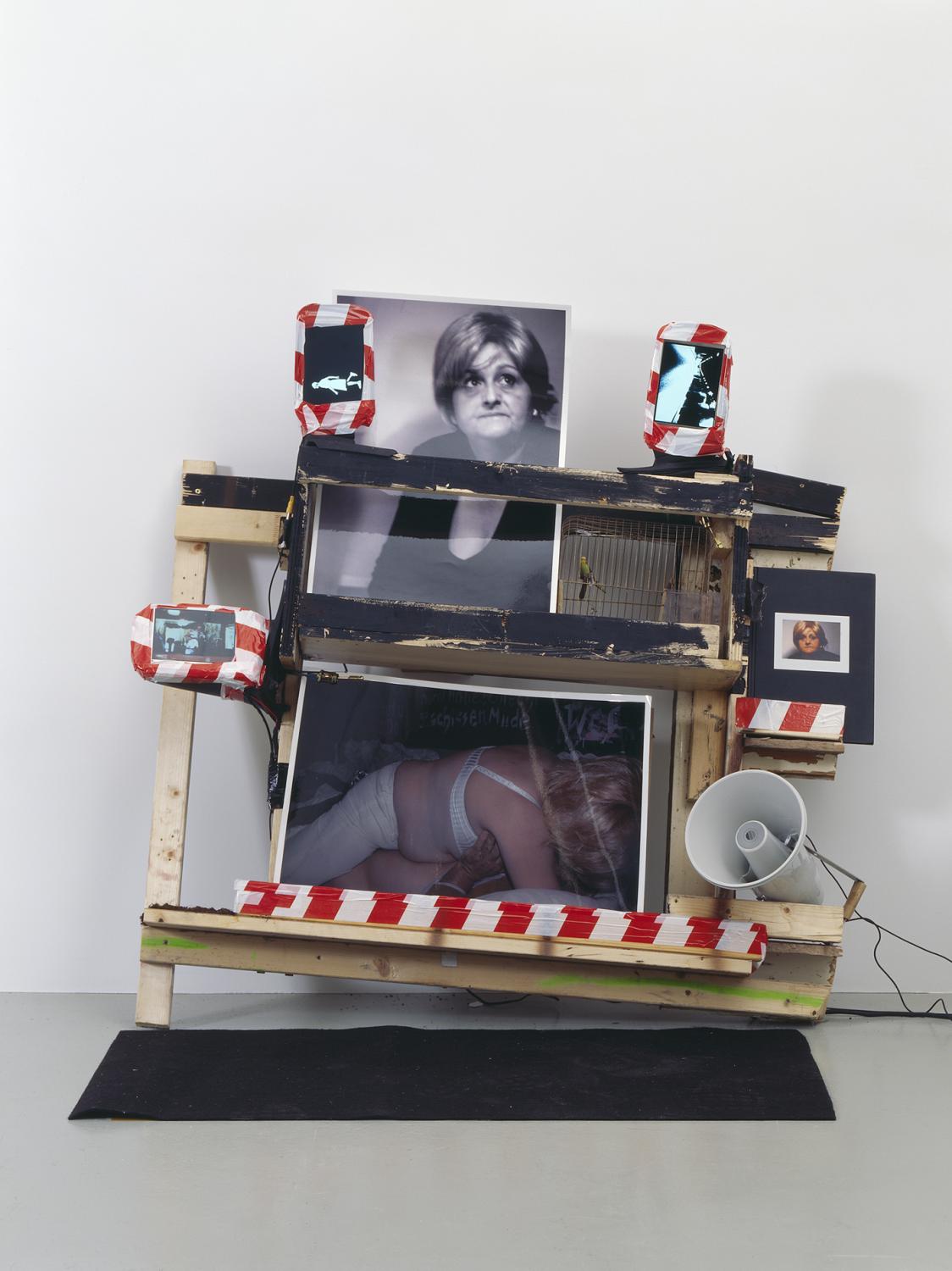
Christoph Schlingensief (1960, Oberhausen, Germany – 2010, Berlin) was a German theatre director, performance artist, filmmaker, and writer. Beginning his career as an independent underground filmmaker, he later developed an influential interdisciplinary practice that encompassed theatre, opera, performance, film, and visual art.
In 1997, Schlingensief staged an art action at Documenta X in Kassel as part of the performance platform "Hybrid WorkSpace", curated by Klaus Biesenbach, Nancy Spector, and Hans-Ulrich Obrist. In 1999, invited by P.S.1 Contemporary Art Center and organised by Klaus Biesenbach, he realised a performance at the Statue of Liberty in New York, where he symbolically "handed Germany over to globalisation" while kneeling at the foot of the monument.
In 2007, the Haus der Kunst in Munich presented a major exhibition of his work, featuring "African Twin Towers" alongside films produced during his direction of Wagner's "The Flying Dutchman" at the Teatro Amazonas in Manaus, Brazil.
During the final years of his life, Schlingensief increasingly focused on opera and theatre. He staged Wagner's "Parsifal" at the Bayreuth Festival and worked with leading opera houses, establishing himself as a significant figure within contemporary Regietheater. In 2011, he was posthumously awarded the Golden Lion at the 54th Venice Biennale for his contribution to the German Pavilion.
Schlingensief's long-standing engagement with questions of culture, community, and social transformation culminated in his most ambitious project: the Opera Village Africa in Burkina Faso. Supported by funding from the German government, the project was conceived as a multidisciplinary cultural and educational centre comprising an opera house, theatre and film school, and medical clinic. Construction began near Ouagadougou in January 2010 and was subsequently continued by his wife and long-time collaborator, Aino Laberenz, whom he married in 2009.
In his final works, including the Fluxus-inspired oratorio "Church of Fear" and the ready-made opera "Mea Culpa", Schlingensief reflected on his experience of cancer, connecting it to memories of his earliest encounters with performance as an altar boy.