




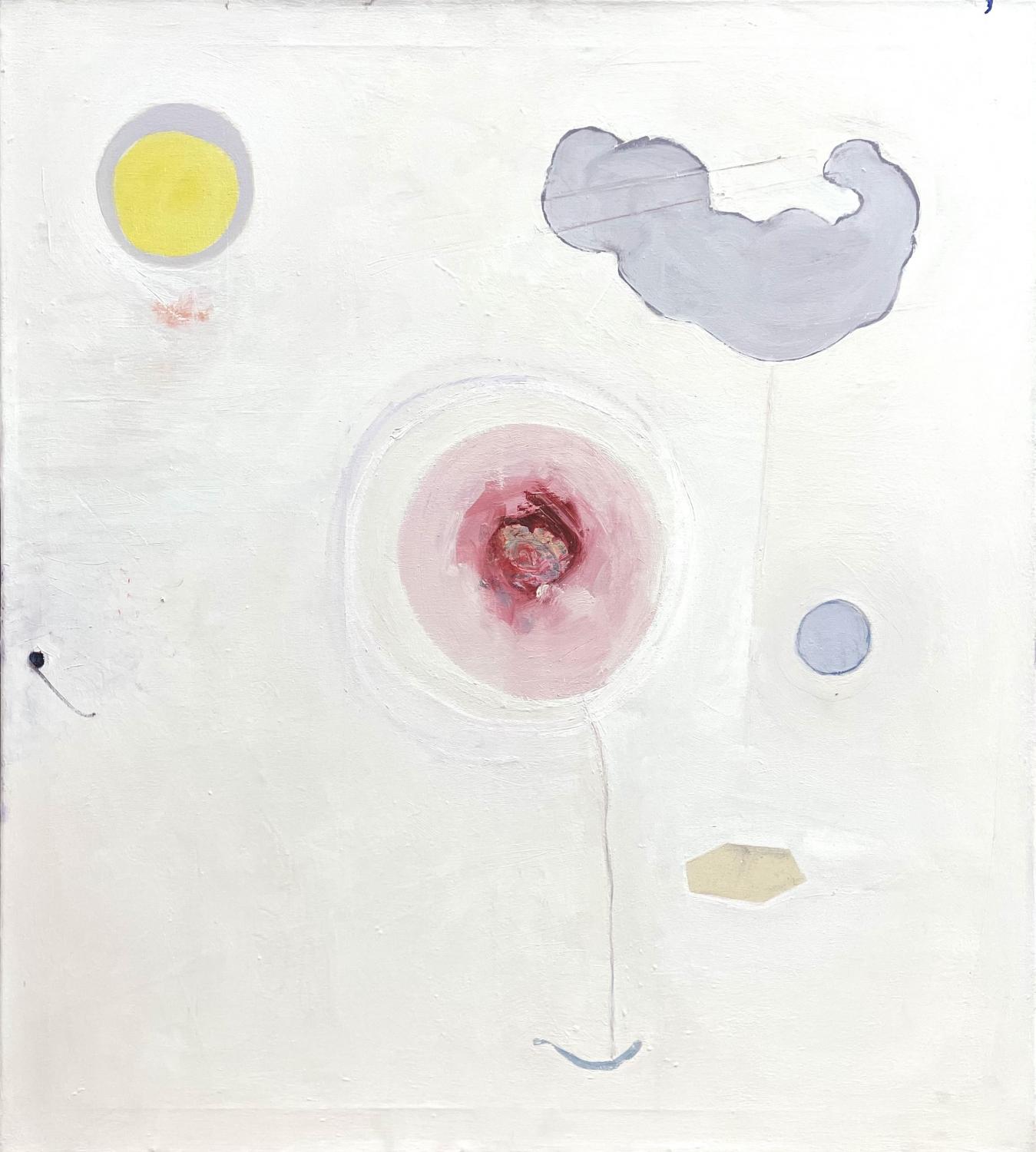
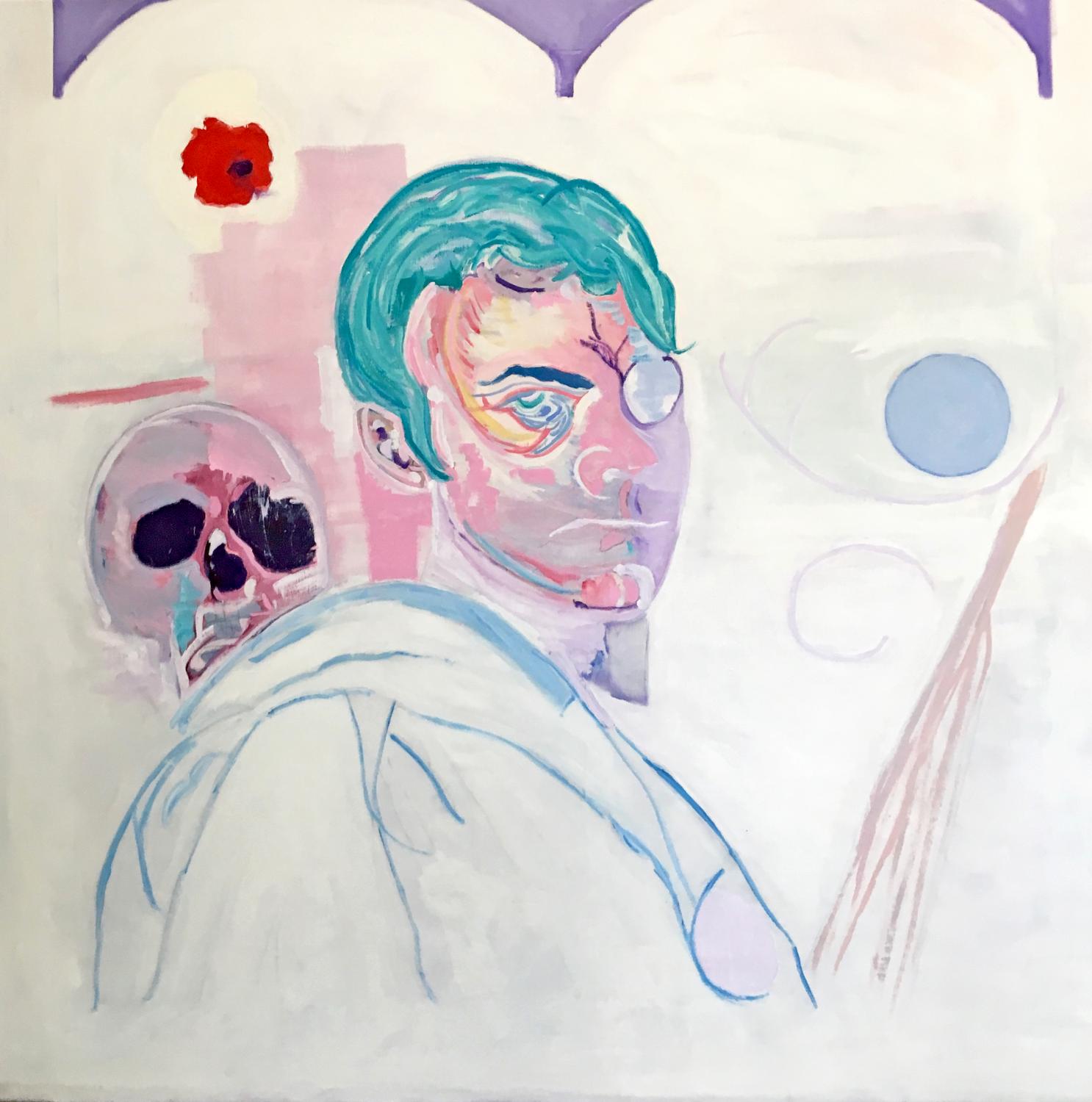
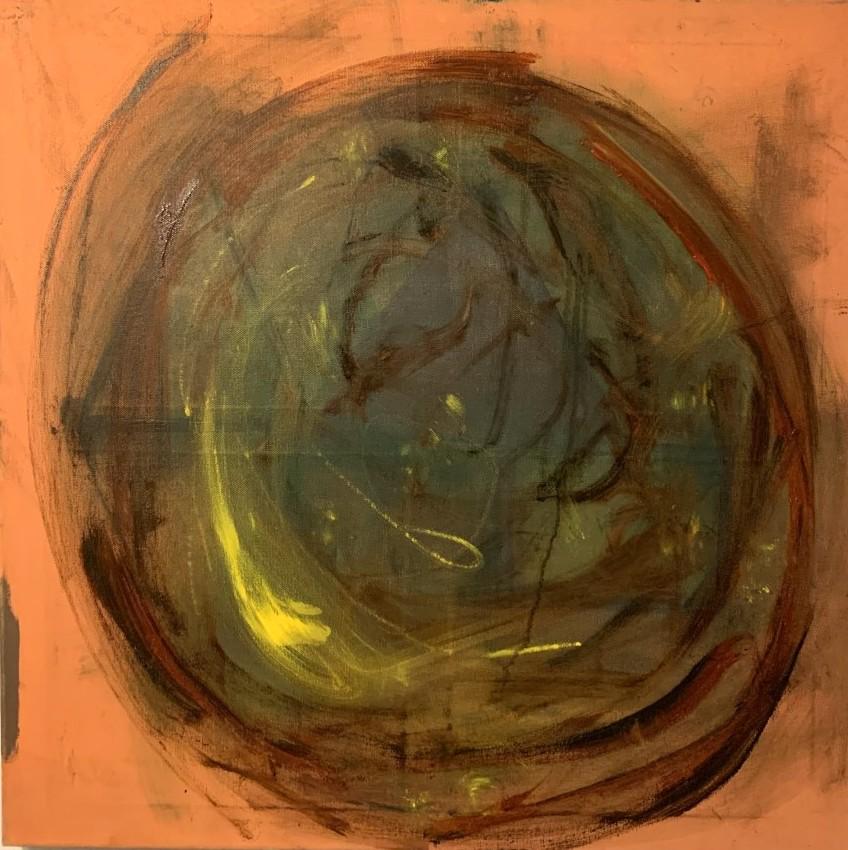
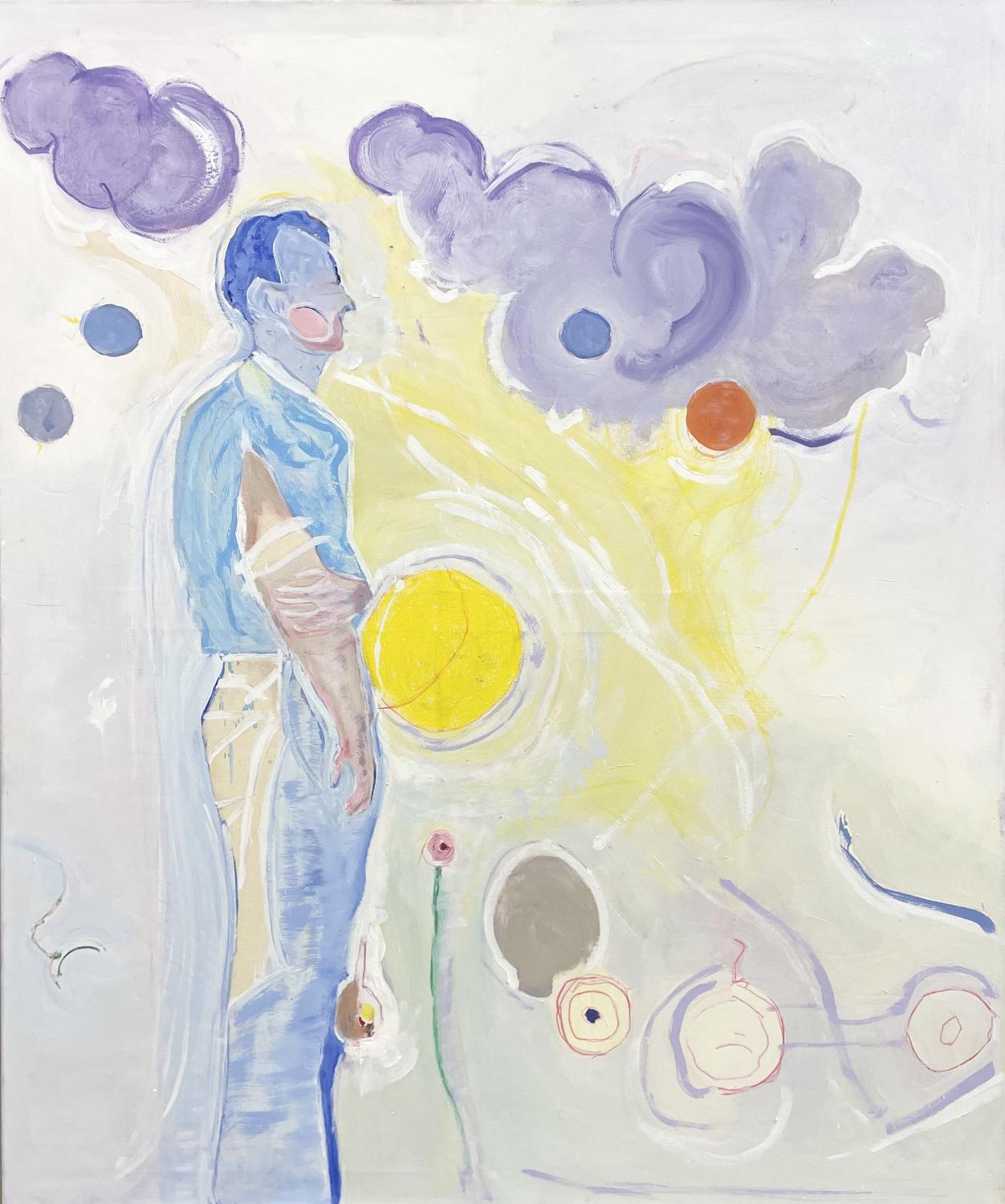
When a poet, curator, and art critic, after decades of work for the field of art—work that, measured against the values traded within it, has been notoriously underpaid—decides to let his concepts play out within painting itself, one can expect each painting to be full of allusions and cross-references, reflecting his extensive knowledge of interconnections within a field he knows and is known in on both sides of the Atlantic.
Of course, through its references to art and literary history, each work can be read as a self-contained piece and, as such, does not depend on the institutional framework whose role was exposed by Duchamp’s urinal and bottle rack. Yet in a more existential sense, it inevitably remains dependent on that framework—just as the participants in the system depend on it, whether it rewards them or drives them to despair. The poet-curator’s attempt to establish an imaginary museum, in which the paintings he has made himself are intended to summon the spirits they depict, thereby acquires a sociological dimension that places him in the lineage of Marcel Broodthaers’s installations. The references that poeticize art history thus become a critique of a soulless, commerce-oriented art world that neglects the interpretability and interconnectedness of its own productions. By reducing this endeavor to a necessity born of the desire to improve one’s existential situation, that system has effectively compelled the phenomenon into existence. The phenomenon itself, as an action, thereby acquires significance within art history.
- Benedikt Ledebur